What Is Slippage and Why It Matters More Than You Think
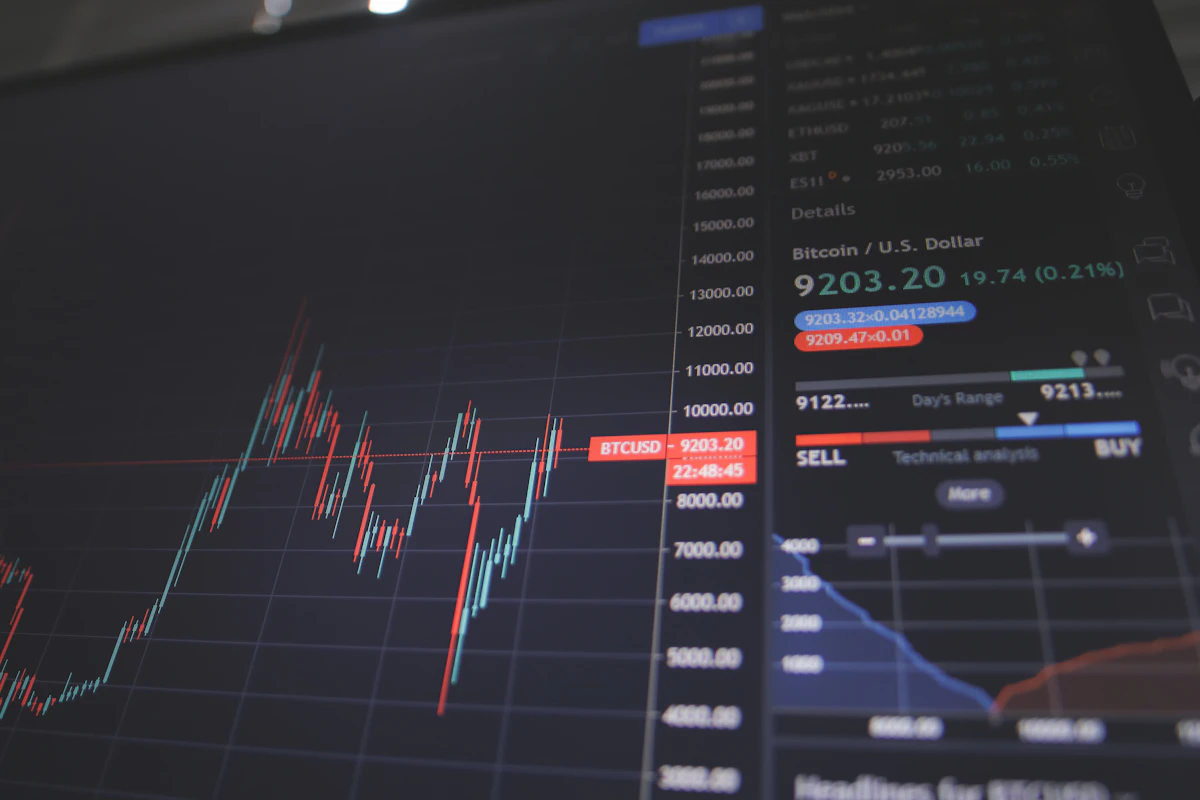
Slippage is the difference between the price you expected to get filled at and the price you actually got filled at. It happens on entries, it happens on exits, and it happens on stops. If you've ever placed a market order on the ES or NQ and watched the fill come back a tick or two worse than what you saw on the screen, that's slippage. Understanding what is slippage in trading is one of those things that seems like a minor technical detail until you realize it's quietly eating a real chunk of your edge every single week.
Most beginners treat slippage as background noise. Experienced traders treat it as a cost of doing business — one that needs to be measured, planned for, and minimized where possible. The gap between those two mindsets is usually the gap between someone who's profitable after commissions and fees, and someone who's convinced their strategy "should" be working but never quite is.
What Is Slippage in Trading, Actually
When you send a market order, you're not buying or selling at a fixed price — you're buying or selling at the best available price the moment your order reaches the matching engine. Between the instant you click and the instant your order fills, the price can move. On a fast market that move can be several ticks. On a slow, thin market it might be nothing at all, or it might be worse than you'd expect even though nothing dramatic is happening.
Exchanges like CME Group don't guarantee execution price on market orders — they guarantee execution itself. A limit order guarantees price but not execution. A stop order, once triggered, becomes a market order and inherits all the same price uncertainty. This tradeoff between fill certainty and price certainty is the entire root of slippage, and it's built into how order books work, not a flaw in your broker or platform.
The Four Main Causes of Slippage
Slippage doesn't come from one source. It's the combination of a few structural factors that stack on top of each other depending on what and when you're trading.
Liquidity
Liquidity is the single biggest driver. A liquid market like the E-mini S&P 500 (ES) during regular trading hours has deep order books — lots of resting bids and offers stacked close to the current price. Your market order gets absorbed without moving the price much. A thin market — a micro contract at 3am, a small-cap stock, an illiquid altcoin — has gaps between price levels. Your order has to "walk the book," eating through multiple price levels to get filled, and the average fill price ends up worse than the quote you saw.
Volatility
Even in a liquid market, volatility spikes slippage. During the open of the cash session, during FOMC announcements, during CPI releases — spreads widen and the book gets thinner because market makers pull orders rather than get run over by a fast move. This is a well-documented microstructure phenomenon: liquidity providers widen quotes or step away entirely when they expect volatility, because posting a tight two-sided market ahead of a surprise number is a good way to get picked off.
Order Type
Market orders prioritize speed over price and will always be more exposed to slippage than limit orders. Stop orders are the sneaky one — traders think of a stop-loss as a guaranteed exit at a defined price, but a standard stop is really just a market order waiting to be triggered. In a fast-moving market, a stop set at 5,900 on the ES can trigger and fill at 5,896 if the market gaps through your level. Stop-limit orders solve the price problem but introduce a new one: if price blows through your limit price without trading back through it, you don't get filled at all, which in a losing trade is arguably worse.
News Events and Scheduled Releases
Scheduled news — Non-Farm Payrolls, CPI, FOMC rate decisions, OPEC announcements for crude — routinely produces the worst slippage of the trading week because volume and volatility spike simultaneously while resting liquidity temporarily disappears. This is also when a lot of retail platforms show requotes or wider effective spreads, and it's why many professional intraday traders simply don't hold positions through high-impact releases unless the strategy is specifically built around them.
How Slippage Compounds Across Many Trades
Here's the part that trips people up: slippage on a single trade looks trivial. A tick here, half a tick there. On the ES, one tick is $12.50 per contract. Lose half a tick on entry and half a tick on exit and you're down $12.50 per round trip before the market has even moved in your favor. That doesn't sound like much against a stop that might be worth $200-$300.
But strategies aren't evaluated on one trade — they're evaluated on hundreds or thousands of trades over a year. A scalping or high-frequency intraday approach that takes 15-20 round trips a day, five days a week, racks up thousands of fills annually. If average slippage is even a single tick worse than modeled per round trip, that's thousands of dollars quietly subtracted from the bottom line — money that never shows up as a discrete "loss" on any one trade, so it's easy to miss when you're eyeballing your equity curve.
This matters enormously for backtesting. A backtest that assumes fills at the exact mid-price or exact signal price is measuring a strategy that doesn't exist in the real world. The strategy that exists in the real world pays the spread, pays slippage on entries, pays slippage on stops, and pays commission on every single contract. A strategy with a thin theoretical edge can go from profitable in a spreadsheet to a net loser once realistic slippage assumptions get applied — and this is one of the most common reasons a backtested system falls apart the moment it goes live.
| Factor | Effect on Slippage | Typical Worst-Case Scenario |
|---|---|---|
| Liquidity | Thin books = larger price gaps between fills | Micro/overnight session, illiquid contract months |
| Volatility | Wider spreads, faster price movement | Market open, momentum breakouts |
| Order type | Market/stop orders prioritize fill over price | Stop-loss triggered in a gap or fast move |
| News events | Liquidity providers pull quotes, volume surges | NFP, CPI, FOMC, OPEC decisions |
Slippage in Prop Firm Accounts
If you're trading a funded account — Apex, TopStep, or any of the other prop firms — slippage has an extra dimension of pain because you're usually operating with a fixed daily or trailing drawdown limit. A string of bad fills near your drawdown line isn't just annoying, it can be the difference between passing an evaluation and getting reset. Most funded traders blow accounts by ignoring how execution quality degrades exactly when they need it most: during high-volatility windows where they're chasing a move to make up for a slow week. That's precisely when spreads widen and stops slip the worst — the two things compound against you at the same time you can least afford it.
This is also why trading around high-impact news with a funded account is often explicitly restricted or heavily discouraged by prop firms — not because the strategy can't work, but because the execution risk during those windows is materially higher than the rest of the session.
How to Actually Reduce Slippage
You can't eliminate slippage, but you can manage your exposure to it.
- Trade the most liquid contract months and instruments. The front-month ES, NQ, and CL contracts trade far tighter than deferred months or thinner products.
- Avoid market orders when you don't need instant execution — use limit orders and accept you might occasionally miss a fill.
- Size down or stand aside around scheduled high-impact news releases if your strategy isn't specifically designed for that volatility.
- Backtest with realistic slippage and commission assumptions built in, not idealized fills. Add a tick or two per round trip and see if the strategy still holds up.
- Track your actual average slippage per trade over time by comparing intended entry/exit price against actual fill price — most platforms let you export this from trade history.
Slippage vs. Spread — Not the Same Thing
People conflate these two constantly. The bid-ask spread is the visible, static cost of crossing the market at any given instant — the gap between the best bid and best offer sitting on the book right now. Slippage is the additional, often invisible cost that shows up when your order moves the market or arrives after the price has already moved. A market can have a tight one-tick spread and still produce meaningful slippage during a fast release, because the quoted spread only tells you the cost of a small order at that exact microsecond — not what happens when volume surges and the book gets consumed faster than it can refill.
Frequently Asked Questions
Can slippage ever work in your favor?
Yes — it's called positive slippage, and it happens when your order fills at a better price than expected, for example a buy stop that fills lower than the trigger price during a fast reversal. It's less common than negative slippage in practice because liquidity tends to evaporate in the direction that hurts the order flow, not helps it, but it does happen.
Does slippage happen in stocks the same way it does in futures?
The mechanics are the same — it's driven by liquidity, volatility, and order type in both markets — but the magnitude differs by instrument. A highly liquid stock like a large-cap S&P 500 name behaves similarly to the ES; a thinly traded small-cap can slip far more than most futures contracts because futures markets, especially the major index and energy contracts, tend to have deeper centralized liquidity.
Do limit orders completely eliminate slippage?
They eliminate price slippage but not execution risk — a limit order guarantees you won't get filled worse than your specified price, but it doesn't guarantee you'll get filled at all. In a fast market, you can watch price trade right through your limit level without ever getting touched, which just replaces slippage risk with missed-fill risk.
Slippage isn't something to fear, it's something to model. Every serious backtest and every serious trading plan should have a number attached to it — a realistic estimate of what execution actually costs on the instruments you trade, at the times you trade them. Ignore it and your live results will quietly diverge from your backtest for reasons that have nothing to do with your edge and everything to do with how order books actually work.